This glossary is to describe terms that I can use in my program ''Sciences pures et Appliquées''.
For this glosarry I used this source : '' www.wikipedia.org ''
acid
noun
An acid is a molecule or ion capable of donating a proton (hydrogen ion H+) (a Brønsted–Lowry acid), or, alternatively, capable of forming a covalent bond with an electron pair (a Lewis acid).
Example: Aqueous Arrhenius acids have characteristic properties which provide a practical description of an acid.
fr: acide
algebra
noun
Algebra is one of the broad parts of mathematics, together with number theory, geometry and analysis. In its most general form, algebra is the study of mathematical symbols and the rules for manipulating these symbols; it is a unifying thread of almost all of mathematics.
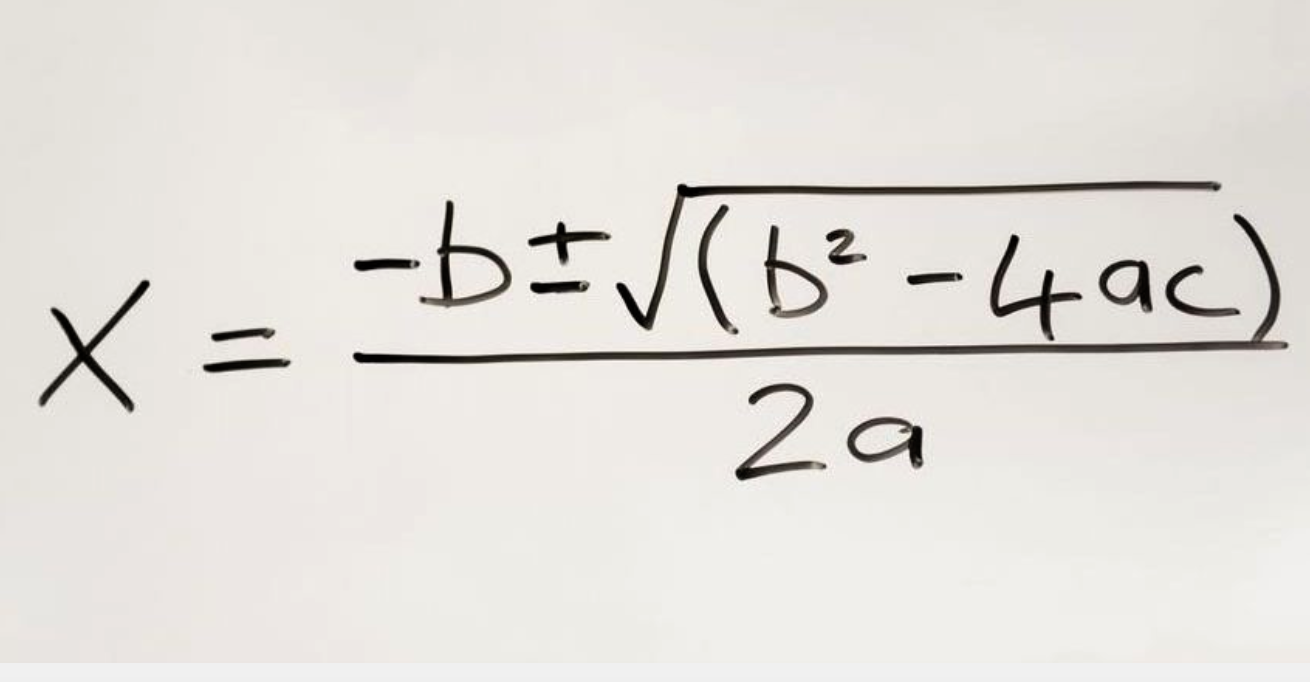
Example: Historically, and in current teaching, the study of algebra starts with the solving of equations such as the quadratic equation above.
fr: Algèbre
angle
noun
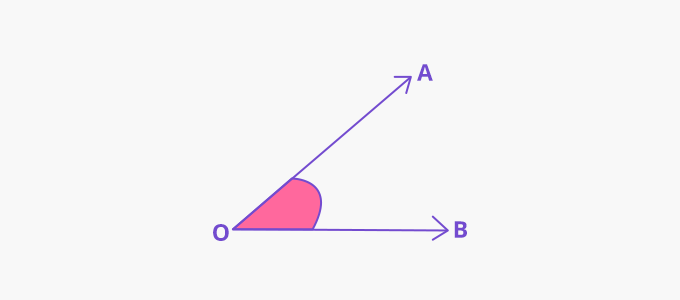
In plane geometry, an angle is the figure formed by two rays, called the sides of the angle, sharing a common endpoint, called the vertex of the angle. Angles formed by two rays lie in a plane, but this plane does not have to be a Euclidean plane.
Example: Angle is also used to designate the measure of an angle or of a rotation.
fr: angle
architecture
noun
Architecture is both the process and the product of planning, designing, and constructing buildings or other structures.
Example: The philosophy of architecture is a branch of philosophy of art, dealing with aesthetic value of architecture, its semantics and relations with development of culture.
fr: Architecture
computer science
noun
Computer science is the study of computation and information. Computer science deals with theory of computation, algorithms, computational problems and the design of computer systems hardware, software and applications.
Example: This branch of computer science aims to manage networks between computers worldwide
fr: Informatique
cubic
noun
In mathematics, a cubic form is a homogeneous polynomial of degree 3, and a cubic hypersurface is the zero set of a cubic form. In the case of a cubic form in three variables, the zero set is a cubic plane curve.
Example: The classification of real cubic forms {\displaystyle ax^{3}+3bx^{2}y+3cxy^{2}+dy^{3}}ax^{3}+3bx^{2}y+3cxy^{2}+dy^{3} is linked to the classification of umbilical points of surfaces.
fr: cubique
distributivity
noun
In mathematics, the distributive property of binary operations generalizes the distributive law from Boolean algebra and elementary algebra. In propositional logic, distribution refers to two valid rules of replacement. The rules allow one to reformulate conjunctions and disjunctions within logical proofs.
Example: If the operation denoted {\displaystyle \cdot }\cdot is not commutative, there is a distinction between left-distributivity and right-distributivity:
fr: distributivité
equation
noun
In mathematics, an equation is a statement that asserts the equality of two expressions, which are connected by the equals sign "=".The word equation and its cognates in other languages may have subtly different meanings; for example, in French an équation is defined as containing one or more variables, while in English, any equality is an equation.
Example: An equation is analogous to a scale into which weights are placed.
fr: équation
gravity
noun
The force that attracts a body toward the center of the earth, or toward any other physical body having mass.
Example: Gravity is most accurately described by the general theory of relativity (proposed by Albert Einstein in 1915), which describes gravity not as a force, but as a consequence of the curvature of spacetime caused by the uneven distribution of mass.
fr: gravité
linearity
noun
Linearity is the property of a mathematical relationship (function) that can be graphically represented as a straight line. Linearity is closely related to proportionality. Examples in physics include the linear relationship of voltage and current in an electrical conductor (Ohm's law), and the relationship of mass and weight. By contrast, more complicated relationships are nonlinear.
Example: The concept of linearity can be extended to linear operators. Important examples of linear operators include the derivative considered as a differential operator, and other operators constructed from it, such as del and the Laplacian. When a differential equation can be expressed in linear form, it can generally be solved by breaking the equation up into smaller pieces, solving each of those pieces, and summing the solutions.
fr: linéaire
mass
noun
Mass is both a property of a physical body and a measure of its resistance to acceleration (a change in its state of motion) when a net force is applied. An object's mass also determines the strength of its gravitational attraction to other bodies.
Example: There are several distinct phenomena which can be used to measure mass. Although some theorists have speculated that some of these phenomena could be independent of each other, current experiments have found no difference in results regardless of how it is measured:
fr: masse
metre
noun
The metre (Commonwealth spelling) or meter (American spelling) (from the French unit mètre, from the Greek noun μέτρον, "measure") is the base unit of length in the International System of Units (SI). The SI unit symbol is m. The metre is defined as the length of the path travelled by light in a vacuum in 1/299 792 458 of a second.
Example: The use of the word metre in English began at least as early as 1797.
fr: Mètre
neutral
noun
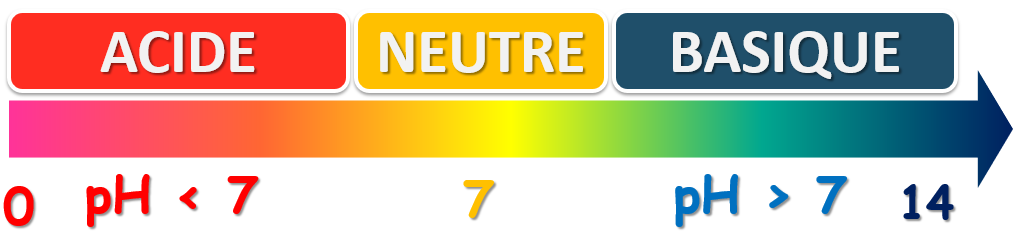
Neutral solution, a chemical solution which is neither acidic nor basic
Example: The neutral value of the pH depends on the temperature, being lower than 7 if the temperature increases.
fr: neutre
number
noun
A number is a mathematical object used to count, measure, and label. The original examples are the natural numbers 1, 2, 3, 4, and so forth. Numbers can be represented in language with number words. More universally, individual numbers can be represented by symbols, called numerals; for example, "5" is a numeral that represents the number five. As only a relatively small number of symbols can be memorized, basic numerals are commonly organized in a numeral system, which is an organized way to represent any number.
Example: During the 19th century, mathematicians began to develop many different abstractions which share certain properties of numbers, and may be seen as extending the concept.
fr: nombre
period
noun
A periodic function is a function that repeats its values at regular intervals, for example, the trigonometric functions, which repeat at intervals of 2π radians. Periodic functions are used throughout science to describe oscillations, waves, and other phenomena that exhibit periodicity. Any function that is not periodic is called aperiodic.
Example: A function with period P will repeat on intervals of length P, and these intervals are sometimes also referred to as periods of the function.
fr: période
result
noun
A result (also called upshot) is the final consequence of a sequence of actions or events expressed qualitatively or quantitatively. Possible results include advantage, disadvantage, gain, injury, loss, value and victory. In mathematics, the final value of a calculation (e.g. arithmetic operation), function or statistical expression, or the final statement of a theorem that has been proven
Example: Reaching no result can mean that actions are inefficient, ineffective, meaningless or flawed.
fr: resultat
square root
noun
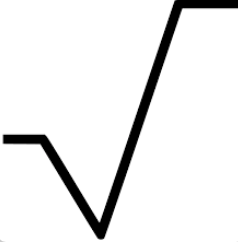
In mathematics, a square root of a number x is a number y such that y2 = x; in other words, a number y whose square (the result of multiplying the number by itself, or y ⋅ y) is x.
Example: Every positive number x has two square roots: √x, which is positive, and −√x, which is negative.
fr: Racine carré
statistics
noun
Statistics is the discipline that concerns the collection, organization, analysis, interpretation and presentation of data.In applying statistics to a scientific, industrial, or social problem, it is conventional to begin with a statistical population or a statistical model to be studied. Populations can be diverse groups of people or objects such as "all people living in a country" or "every atom composing a crystal". Statistics deals with every aspect of data, including the planning of data collection in terms of the design of surveys and experiments. See glossary of probability and statistics.
Example: The earliest writings on probability and statistics date back to Arab mathematicians and cryptographers, during the Islamic Golden Age between the 8th and 13th centuries. Al-Khalil (717–786) wrote the Book of Cryptographic Messages, which contains the first use of permutations and combinations, to list all possible Arabic words with and without vowels.
fr: statistiques
superscript
noun
A superscript is a character (such as a number or letter) that is set slightly below or above the normal line of type, respectively. It is usually smaller than the rest of the text. Superscripts are above. Subscripts and superscripts are perhaps most often used in formulas, mathematical expressions, and specifications of chemical compounds and isotopes, but have many other uses as well.
Example: These superscripts typically share a baseline with numerator digits, the top of which are aligned with the top of the full-height numerals of the base font; lowercase ascenders may extend above.
fr: exposant
temperature
noun
Temperature is a physical quantity that expresses hot and cold. It is the manifestation of thermal energy, present in all matter, which is the source of the occurrence of heat, a flow of energy, when a body is in contact with another that is colder.
Example: Temperature is measured with a thermometer.